Author: PAZAMBA

  • Stock Market Summary – June 09, 2025

    US stock futures remained little changed after two positive weeks. S&P 500 has ended above 6,000 for the first time since late February and is less than 3% away from its record closing. Trade talks between the US and China, consumer price index, and producer price index might determine the rise. The US and China are trying to negotiate to cut tariffs ranging from 30% and 10%, a concern causing uncertainty for investors.

    Apple Inc., having suffered from Trump’s trade wars, is having a WW Developers Conference. Apple shares have fallen over 18% in 2025 due to tariff concerns affecting profits and consumer demand.

    Warner Bros. Discovery announced its split into two public companies, a streaming and studios business (including its movie empire and HBO Max) and a global networks company (featuring CNN, TNT Sports, and Discovery). This move is disrupting the media industry as more consumers move to streaming platforms.

    Major semiconductor stocks seem overextended, as evidenced by stocks like Broadcom (AVGO) and Nvidia (NVDA), which are due for pullbacks according to the DeMARK indicators. AVGO has forecasted deeper pullbacks over the next 2-4 weeks, with a near-term retracement for NVDA as well.

    Topgolf Callaway Brands’ stocks soared 11% after a major corporate director bought about $2.5 million worth of company shares. The company’s stock has declined 9% in 2025 and over 50% over the past year.

    CEO recession expectations have declined from April, with less than 30% of CEOs predicting a mild or severe recession in the next six months. This is down from 46% who predicted the same in May and 62% in April.

    Warner Bros. Discovery split has cast doubt over the future of TNT Sports. The current Warner Bros. Discovery CFO, Gunnar Wiedenfels, will become the CEO of Global Networks, and the future decision regarding TNT Sports programming lies in his hands. He might, for example, license TNT Sports programming to Streaming and Studios business or other entities.

    In summary, the stock market is cautiously observing the outcomes of US-China trade talks, while the technology and media sectors are witnessing significant shifts because of changing consumer demands and tariff concerns. Greatest attention falls onto industries such as semiconductors and sports entertainment, which are undergoing marked over-extensions and insider purchasing, respectively.

    The stock market experienced a peculiar rotation with laggards like Texas Instruments gaining traction while previous winners saw a downturn. This may be concerning due to the shift in investing lower-quality stocks over higher quality ones. However, Starbucks saw a recovery as it navigated the competitive Chinese market. The company’s price cutting strategy on non-coffee beverages appears to be winning customers over during the summer. Starbucks experienced a nearly 7% rise last week and a continuous climb.

    In contrast, Broadcom’s earnings report led to a sell-off, making it close 5% lower. Despite this, AI revenue rose 46% YoY, causing price targets at several firms to increase. This caused Jim Cramer of CNBC Investing Club to advise buying into Broadcom’s stock.

    In the healthcare sector, Alnylam Pharma (ALNY) broke out prior resistance at $300 due to company-specific news about new indications for one of their drugs, leading to multiple price target raises. Alnylam grew revenue to $2.25 billion in revenue last year and sustained a $40 billion market cap. The company is expected to experience a revenue growth of 24–33% in the next years.

    Biggest gainers were Warner Bros. Discovery, Topgolf Callaway Brands, Quaker Chemical, and IonQ, the quantum computing stock that announced a billion-dollar deal to acquire Oxford Ionics. On the other hand, Universal Health Services, EchoStar, Apple, Robinhood, AppLovin, Intuitive Surgical, McDonald’s, and Aon were among the biggest losers.

    President Donald Trump is also promoting “Trump accounts”, an investment account program for newborn Americans that gives $1,000 from government funding. CEOs from Uber, Dell, Goldman Sachs and other companies are expected to invest billions of dollars into these accounts.

    Lastly, Americans grew less fearful about inflation as President Trump backed off the most severe of his tariff proposals. The annual inflation outlook dipped to 3.2%, a 0.4 percentage point decrease from April, indicative of progress despite still being above the Fed’s 2% annual target.


    Sources:

  • Weekly Stock Market Update | Dow, S&P 500, NASDAQ News – June 08, 2025 at 07:00 AM

    The Dow Jones Industrial Average jumped 443.13 points, or 1.05%, to close at 42,762.87. This follows a more than solid jobs report from the Bureau of Labor Statistics, revealing that U.S. payrolls climbed by 139,000 in May. Investors are also anticipating tariff-related inflation impacts, which are expected to be reflected in economic data this summer.

    The S&P 500 gained 1.03%, surpassing the 6,000 level for the first time since late February and settling at 6,000.36. The S&P 500 ended the session 2% below its February high but posted a gain of 1.5% for the week.

    The Nasdaq Composite rallied 1.20%, ending at 19,529.95, showing a significant jump of 2.2% over the week.

    Tesla shares gained over 3% after a sharp drop of 14% when CEO Elon Musk had a public dispute with President Donald Trump. However, other tech companies, including Nvidia, Meta Platforms, and Apple, ended the session on a high note.

    In terms of losers, Tesla experienced a significant drop in its stock following CEO Elon Musk’s engagement in a social media spat with President Trump. This saw Tesla’s stock falling by 14% in a single day, making a noticeable dent in the S&P500 and the Nasdaq.

    As the market eyes inflation data for the month of May, updates on corporate earnings from GameStop, Oracle, and Adobe are forthcoming, with Apple’s Worldwide Developers Conference also in focus. Activities related to trade negotiations and Federal Reserve interest rate policy decisions continue to be closely watched.

    Tariff impacts are starting to show up in economic data, raising inflation concerns which could threaten consumer spending power. However, investors remain hopeful that the stock market can overcome a possible one-time adjustment in pricing pressures.

    Nevertheless, grounds for optimism persist as the effective tariff rate has significantly come down following China and the U.S.’s willingness to negotiate duties.

    Wall Street has seen a cautious rally this week in hopes of President Donald Trump softening his tone on trade wars. As a result, the S&P 500 closed Friday at its highest level since February. The Dow closed 443 points up, a 1.05% increase. The S&P 500 rose by 1.03% and the Nasdaq Composite gained 1.2%. Back-to-back weeks of gains were posted by the Dow, S&P 500, and Nasdaq.

    Tesla (TSLA) led the rebound, gaining 3.67%. The electric car manufacturer’s stock value had plummeted 14% after a social media dispute with President Trump. Despite the rebound, Tesla’s market value remains down by approximately $119 billion over the past two days.

    On the downside, the Dow Jones Industrial Average fell 91.90 points, or 0.22%, ending the week at 42,427.74. The loss is attributed to concerns over trade policy uncertainty impacting the U.S. economy. Also, payrolls processing firm ADP reported a significant decline in private sector hiring — its lowest in over two years.

    Barclays strategist Venu Krishna increased his year-end S&P 500 target by almost 3%, moving from 5,900 to 6,050. This left the S&P 500 less than 3% below its all-time high. His move follows similar adjustments by RBC’s Lori Calvasina and Deutsche Bank’s Binky Chadha. Despite the revisions, they still fall short of their initial 2025 forecasts.

    Separately, Apple received a rare downgrade from Needham, lowering its rating from buy to hold due to high relative valuation, increasing fundamental growth headwinds, and rising competition.


    Sources:

  • Stock Market Summary – June 06, 2025

    This year, international stocks have surpassed US stocks as investors move away from the unpredictability of the American market. The MSCI ACWI ex-USA index has returned 15.7%, while the S&P 500 has only returned 1.5%. This shift has been attributed to concerns over market volatility in the US and uncertainty regarding policies. In the backdrop of this, experts advise diversifying portfolio by adding international stocks but also caution against drastic changes based on short-term market results.

    Cryptocurrency exchange and custodian, Gemini, has confidentially filed for an IPO in the US. The company, founded by the Winklevoss twins, hasn’t decided on the number of shares or the pricing terms yet. The move comes after the company’s resolution of a $5 million settlement with the Commodity Futures Trading Commission.

    The stock of casual dining chain Texas Roadhouse is seeing a boost with a 1% rise encouraged by UBS analysts’ confidence in sustainable outperformance going forward. The company has seen increased foot traffic and has projected a 5% increase in same-store sales for the second quarter. After weather-induced first quarter struggles, the warmer season signals an increase in business.

    On the flip side, Tesla shares fell 14%, wiping off $152 billion of its market cap, after an exchange of insults between Elon Musk and President Donald Trump on social media platforms. Today, the major indexes are up modestly with the Dow Jones Industrial Average increasing by 0.12%, the S&P 500 by 0.47%, and the Nasdaq Composite by 0.97%.

    Lastly, Omada Health’s shares surged by 40% in the Nasdaq debut, following the pricing of its stock at $19 per share in its IPO. The company sold approximately 7.9 million shares, raising about $150 million.

    The stock market showed dynamic movement, influenced by several factors, including company financial results and various news in the financial world. Petco Health shares experienced a substantial dip, falling by 22% after a disappointing financial report showed more losses and less revenue than anticipated. The electric vehicle company, Tesla, posted gains of over 6%, recovering from a 14% drop the previous day linked to a public feud between CEO Elon Musk and President Donald Trump.

    The digital health company, Omada Health, marked its debut on the Nasdaq with a price surge of more than 30%. In contrast, chipmaker Broadcom saw its shares fall by 2.7% on unimpressive free cash flow figures for Q2. Facility management company, ABM Industries, witnessed an 11% drop in shares despite meeting earnings expectations for Q2.

    Stablecoin company, Circle Internet Group, enjoyed a boost of 38% following its successful debut on the New York Stock Exchange. Athleisure company Lululemon shares fell by 20% amid disappointing second-quarter outlooks. The apparel company, G-III Apparel Group, saw stock prices collapse by 15% due to weak Q2 earnings guidance.

    The electronic signature company, DocuSign, also experienced a dip in share price by 19% after it cut its full-year billings forecast. Shares in customer engagement platforms provider, Braze, fell by 13% following disappointing guidance. The supplier of construction materials, Quanex Building Products, saw a significant uptick of 18% in shares after beating analysts’ estimates.

    Meanwhile, amid reports of the Trump administration’s attempts to dissolve the U.S. Department of Education, financial commentator Jim Cramer suggested new investors buy shares in Broadcom due to the strong long-term performance of the stock. He also hinted that Apple’s stock is less risky than he had initially thought.

    Despite recent turbulence, the U.S. stock market maintained its momentum, boosted by substantial job gains and strong labor market data. The market rallied on Friday after the release of an update on nonfarm payrolls showed that the U.S. economy added 139,000 jobs in May, indicating that the labor market was healthier than feared.


    Sources:

  • Stock Market Summary – June 05, 2025

    Apple’s shares fell by 0.7% in trading, following the US appeals court rejection of the company’s plea to halt mandated changes to its App Store that could cost “substantial sums”. This comes as a setback in its long-term legal battle with Epic Games, which asked for Apple to reduce its stronghold on certain in-app purchases. Experts believe that the ruling could put 2% of the company’s earnings per share at risk, as well as 10% of App Store revenue and 3% of their overall revenue. The legal fight with Alphabet’s Google also threatens their services division.

    Circle Internet Group’s shares soared by 168% following its initial public offering on the New York Stock Exchange, at one point exceeding the $100 mark. The company, which issued stablecoins as a part of its offering, managed to raise nearly $1.1 billion.

    In other news, defense tech startup Anduril Industries raised $2.5 billion in funding at a $30.5 billion valuation. Peter Thiel’s Founders Fund led the funding round and contributed $1 billion.

    Meanwhile, satellite imaging company Planet Labs’ shares increased by more than 50% after posting strong first-quarter results. The company reported record revenues and positive free cash flow for the first time.

    The financial day also saw positive gains for MongoDB, with a 19% increase, and discount store Five Below having a 10% increase in shares. Apple and Tesla were the main losers of the day, experiencing declines in shares due to various factors, primarily legal battles and tariff issues.

    Procter & Gamble announced plans to cut 7,000 jobs as part of a broader two-year restructuring program. The layoffs are expected to affect around 15% of its nonmanufacturing workforce in an effort to offset higher costs due to President Trump’s tariffs. P&G is also expected to raise prices in the next fiscal year and anticipates a $600 million pre-tax headwind due to tariffs by 2026. The company’s shares fell more than 1% on the announcement and have dropped 2% this year.

    Broadcom’s stock has surged 31% over the past month ahead of its fiscal Q2 earnings report, with the company expected to report earnings of $1.56 per share on revenues of $14.99 billion, equal to YoY growth of 43% and 20%, respectively. Wall Street banks remain optimistic about the company, especially due to its growing strength in the AI field.

    Shares of whiskey-maker Brown-Forman, the producer of Jack Daniel’s, fell more than 18% after delivering a Q4 earnings report below analyst expectations. The drop-off was attributed to tariffs and weak consumer spending on alcohol. The company expects single-digit declines in organic net sales and organic operating income over fiscal 2026.

    Other major stock movers include MongoDB, which saw a 16% surge after exceeding Q1 earnings expectations. Tesla’s shares, on the other hand, dropped over 3% after CEO Elon Musk criticized President Trump’s spending bill policies. The document storage and retrieval provider surged 16% after forecasting higher Q1 earnings, while Five Below saw a 7% climb due to positive Q1 earnings. Brown-Forman and the Calvin Klein parent PVH Corp experienced drops by 10% and 18% respectively due to missed earnings expectations.

    The American trade deficit fell by a record amount in April as demand for imports decreased. The deficit reduced to $61.6 billion, a decrease of $76.7 billion from the previous month, largely driven by slowing imports and accelerating exports.


    Sources:

  • Stock Market Summary – June 04, 2025

    The ongoing trade tariffs have led to increased costs which companies are now transferring to their customers, amidst fears of hitting customer wallets. Currently, around 77% of service firms and 75% of manufacturers have pushed this price hike to their clients as per a survey by the New York Fed. The market saw a partial recovery when President Trump rolled back the levies for three months. Now, the focus is on a July 9 deadline for the return of these suspended tariffs.

    The AI chipmaker, Nvidia, has regained its position as the most valuable publicly traded company in the world, bypassing Microsoft with a market cap of $3.45 trillion after a 2.8% rise in shares. Tesla’s shares have dropped more than 3% due to a persistent slump in Europe sales. Meanwhile, despite the tariff-related challenges hitting other retailers, Dollar General raised its full-year forecast amidst increasing customer demands for discounts.

    In political news, President Trump discussed ongoing issues in the Ukraine and nuclear talks with Iran during a conversation with Russian leader Vladimir Putin. No immediate resolution to these situations was reached.

    Wells Fargo’s $1.95 trillion asset cap has been removed after seven years by the Federal Reserve, signaling a pivotal moment for the bank and potentially more upside for the stock as it can now expand its deposit base and invest more into high-growth lines of business.

    Notably performing stocks include cybersecurity firm CrowdStrike, impacted by a disappointing revenue forecast; and Dollar Tree, predicting earnings pressure from ongoing tariffs. Meanwhile, recreational vehicle maker Thor Industries has seen a share increase following better-than-expected quarterly results, and insurance technology provider Guidewire Software’s earnings surpassed Wall Street estimates. Asana’s shares dropped after guidance fell short of expectations, while Constellation Energy suffered a downgrade at Citigroup to neutral. Finally, industrial machinery suppliers Flowserve and Chart Industries saw a decline in their shares amidst news of an all-stock merger deal.

    The stock market saw a modest rise, extending the week’s gains despite weak jobs data from the ADP report showing slow hiring growth over the last two years. The report has prompted a call for lower interest rates from former-President Trump. Technology company CrowdStrike stocks dropped by over 4.5% after earnings were released, despite showing strong quarterly results. However, the stock of technology company Broadcom gained a further 1%, following a seven-session winning streak and a record high.

    Amazon plans to invest $10 billion in data centers located in North Carolina, aiming to enhance its artificial intelligence (AI) infrastructure. The move falls in line with Amazon’s $100 billion earmarked this year for capital expenditures, the majority of which are AI-related projects. The North Carolina investment is expected to create approximately 500 jobs.

    The average 401(k) savings rate has reached a record high, nearing a popular rule of thumb. In 2025 Q1, the savings rate, including employee and employer contributions, hit 14.3% – approaching Fidelity’s recommended 15% savings target.

    Microsoft’s LinkedIn CEO Ryan Roslansky will take on an additional role overseeing Office productivity software. Microsoft’s subsidiary LinkedIn has continued to operate independently, generating over $17 billion in revenue over the past year.

    Finally, shares of Chinese tea chain Chagee are reportedly undervalued, according to Citi Research. Although the company’s shares have dropped by more than 10% since its public launch in April, the stock recovered by approximately 14% this week. Citi predicts around a 44% potential gain with a price target of $43.70.


    Sources:

  • Stock Market Summary – June 03, 2025

    Artificial intelligence chipmaker Nvidia reclaimed the title of the world’s most valuable publicly traded company, surpassing Microsoft with a market cap of $3.45 trillion. Nvidia shares rose about 3%, contributing to a nearly 24% surge over the past month. Other big movers in the chip market included Broadcom and Micron Technology, which increased 3% and 4% respectively.

    U.S. stock futures showed little change after S&P 500 posted two days of gains. Dow Jones Industrial Average futures edged up by 0.01%, while S&P 500 futures also gained 0.01% and Nasdaq 100 futures fell by 0.02%. Cybersecurity firm CrowdStrike Holdings experienced a drop of over 6% in extended trading due to soft guidance on revenue, while Hewlett Packard Enterprise surged by 3%.

    Analysts are predicting further growth for biotech company Merus following the release of promising data for a cancer treatment. The Netherlands-based company’s shares ramped up by about 40% over the past month and reached a new all-time high.

    Fed Governor Lisa Cook expressed concern about the impact of tariffs on inflation and the labor market, highlighting potential risks to economic stability. Despite these concerns, the economy is currently considered in relatively good shape.

    In other news, Elon Musk’s brain tech startup Neuralink closed a funding round of $650 million, and Campbell’s reported robust sales in meals and beverages amidst a trend of increased home cooking.

    The Dow Jones rose more than 200 points, or 0.5%, with the S&P 500 and the Nasdaq Composite advancing by 0.6% and 0.8% respectively. The stock market continues to rally despite trade concerns and softening economic indicators.

    Stock market movements saw some notable impacts on certain companies. Hewlett Packard Enterprise saw its shares increase by 3% after reporting a Q2 adjusted earnings 38 cents per share, beating expectations of 32 cents. However, cybersecurity firm CrowdStrike saw a 6% decrease after soft revenue guidance for Q2, forecasting between $1.14bn-$1.15bn versus expected revenues of $1.16bn.

    Shares in Guidewire Software rose by approximately 8% after delivering Q3 results that exceeded expectations. Similarly, Wells Fargo & Co.’s stock also rose 2% following the lifting of restrictions imposed by the Federal Reserve on its asset cap.

    S&P 500 is expected to undergo some changes, with several financial services companies potentially getting a boost. Stocks identified for potential inclusion include Robinhood, Interactive Brokers, Ares Management, Flutter Entertainment, and Cheniere Energy.

    Uranium Energy, a US-based stock, is projected to rally by more than 30%, echoing President Donald Trump’s intention to quadruple nuclear power by 2050. BMO Capital Markets initiated coverage on Uranium Energy suggesting a buying target of $7.75 per share, indicating a 36% upside to its current closing price.

    Lastly, the launch of Nintendo’s new console, ‘Switch 2,’ is anticipated to be received positively, with Nvidia’s CEO Jensen Huang praising the console’s highly advanced features, including artificial intelligence processors aimed at enhancing gameplay.


    Sources:

  • Weekly Stock Market Update | Dow, S&P 500, NASDAQ News – June 01, 2025 at 07:00 AM

    This week, the S&P 500 remained flat and continued its 6% May gain as investors continued to look past trade policy confusion. The S&P 500 slightly went down by 0.01% to end at 5,911.69, while the Nasdaq Composite dipped 0.32% to 19,113.77 and the Dow Jones Industrial Average added 54.34 points, or 0.13%, to finish at 42,270.07.

    While the trading session marked the end of a successful trading month, especially following a trade deal announcement between the U.S. and the U.K., investors are still expressing uncertainty around the U.S.-China trade talks. Legal issues and potential recession risks tied to tariffs and U.S trade policy changes remain significant concerns.

    Several stocks were notably affected during the trading week. Nvidia was the star of this week, raising its price target to $170 per share from $165. Despite the export restrictions on artificial intelligence chips in China, Nvidia shares surged more than 3% this week. However, Salesforce’s stock fell due to arguments that CEO Marc Benioff is focusing too much on AI rather than the company’s core business, negatively affecting its shares.

    Inflation continued to cool in April according to the Personal Consumption Expenditures index. However, there is still concern around the tariff levels that could rekindle inflation in the future. The Federal Reserve has expressed a need for a cautious approach to monetary policy should inflation increase.

    In summary, there was a 6.2% increase for the S&P 500, a 9.6% increase for the Nasdaq, and a 3.9% gain for the Dow this May. The tech-heavy Nasdaq advanced 2%, while the S&P 500 and Dow rose by 1.9% and 1.6% respectively this week.

    The stock market has seen a significant comeback recently, with the S&P 500 rallying roughly 6% and the Nasdaq Composite climbing over 9% in this month. Tech stocks, especially those tied to artificial intelligence, significantly benefited, with Nvidia topping the gainers after rallying by more than 23% in May due to strong results. However, the rally coupled with factors such as rising tariffs and jobless claims has raised concerns of investor complacency, with the S&P 500 currently trading at a forward price-to-earnings multiple of roughly 21.

    Trade tensions, particularly between the U.S. and China, have also seen an uptick, casting a shadow on the stock market. The future performance of equity markets may largely depend on resilient consumer spending and the employment picture. Economists predict that the May jobs report will indicate the addition of 125,000 jobs, a drop from the 177,000 jobs added in April. A weaker-than-expected report could shake investor confidence.

    The Dow, S&P, and Nasdaq closed at 42,098.70, 5,888.55, and 19,100.94 respectively. Okta shares dropped more than 16% due to global economic uncertainty. On the upside, Abercrombie & Fitch and Dick’s Sporting Goods saw a surge in their stock prices by more than 14% and nearly 2% respectively following earning reports.

    Unity Software also witnessed a significant boost, with its share price soaring 25.7% within a week, largely driven by a bullish coverage from Jeffries who upgraded the stock from hold to buy. This surge was facilitated by the overall positive trend in the broader market which advanced by 1.9%. Unity has been focusing on its new Vector digital advertising platform which utilizes AI for better ad targeting, which could potentially help attract more customers and drive sales growth in the future.


    Sources:

  • Stock Market Summary – May 30, 2025

    US stocks generally traded lower on Friday due to renewed uncertainty surrounding US-China trade. Potential new restrictions on Chinese tech companies impacted the tech sector, creating a considerable negative headline for China-exposed companies. The Atlanta Fed’s GDPNow tracker, however, projects a positive gain of 3.8% for Q2, up from its previous estimate of 2.2% on May 27. The market anticipates updates from CrowdStrike and Broadcom next week.

    Elon Musk led automaker Tesla noted strong increases for the month, with shares on track for more than 20% increase despite reportedly poor sales in China and Europe. However, the stock still trails about 12% for the year, and Apple is down approximately 21% year-to-date.

    Following hedge fund Third Point’s 30th year milestone, its CEO Daniel Loeb highlighted the increasing importance of AI in investment decisions. Companies like Meta, Nvidia, Microsoft, and Amazon have built significant competitive edges in the AI space, and Loeb is also betting on AI benefiters like London Stock Exchange Group and Taiwan Semiconductor Manufacturing.

    In other news, President Trump is set to hold a rally at a U.S. Steel plant near Pittsburgh to deliver clarity about a merger with Japan’s Nippon Steel. It is expected that Nippon will close its acquisition of U.S. Steel at $55 per share.

    Meanwhile, CNBC’s Jim Cramer expressed frustration over Friday’s lower market, mainly fueled by President Trump’s indication of a harsher stance towards China. Cramer, however, sees positive movements for two bank stocks, Goldman Sachs and Wells Fargo, due to their involvement in EOG’s $5.6 billion purchase of Encino and the end of a 2015 consent order with the OCC, respectively.

    What was absent from the articles was specific numerical data on Dow, S&P, and Nasdaq, so I am unable to provide a summary of those indicators. The behavior, gainers, and losers for specific stocks were also not explicitly mentioned within the articles.

    The stock market witnessed quite a bit of movement today. Wholesaler Costco gained more than 3% on fiscal Q3 results that exceeded analyst’s estimates, and beauty retailer Ulta Beauty shares jumped nearly 13% following the company’s announcement of a boosted annual profit forecast and high Q1 results.

    In contrast, apparel retailer Gap’s shares plummeted 20% due to the company’s prediction of flat current-quarter sales from the same period last year, whilst expected to grow 0.2%, which weighed down on the Q1 earnings and revenue beat. Software company Elastic NV saw a decline of 12% after the full-year revenue forecast missed analyst’s estimates. Marvell Technology dropped 6% after its Q1 earnings failed to impress investors, while Regeneron Pharmaceuticals and Sanofi’s biopharma stocks dropped 18% and 5.6% respectively due to inconsistent results from late-stage trials for a respiratory drug.

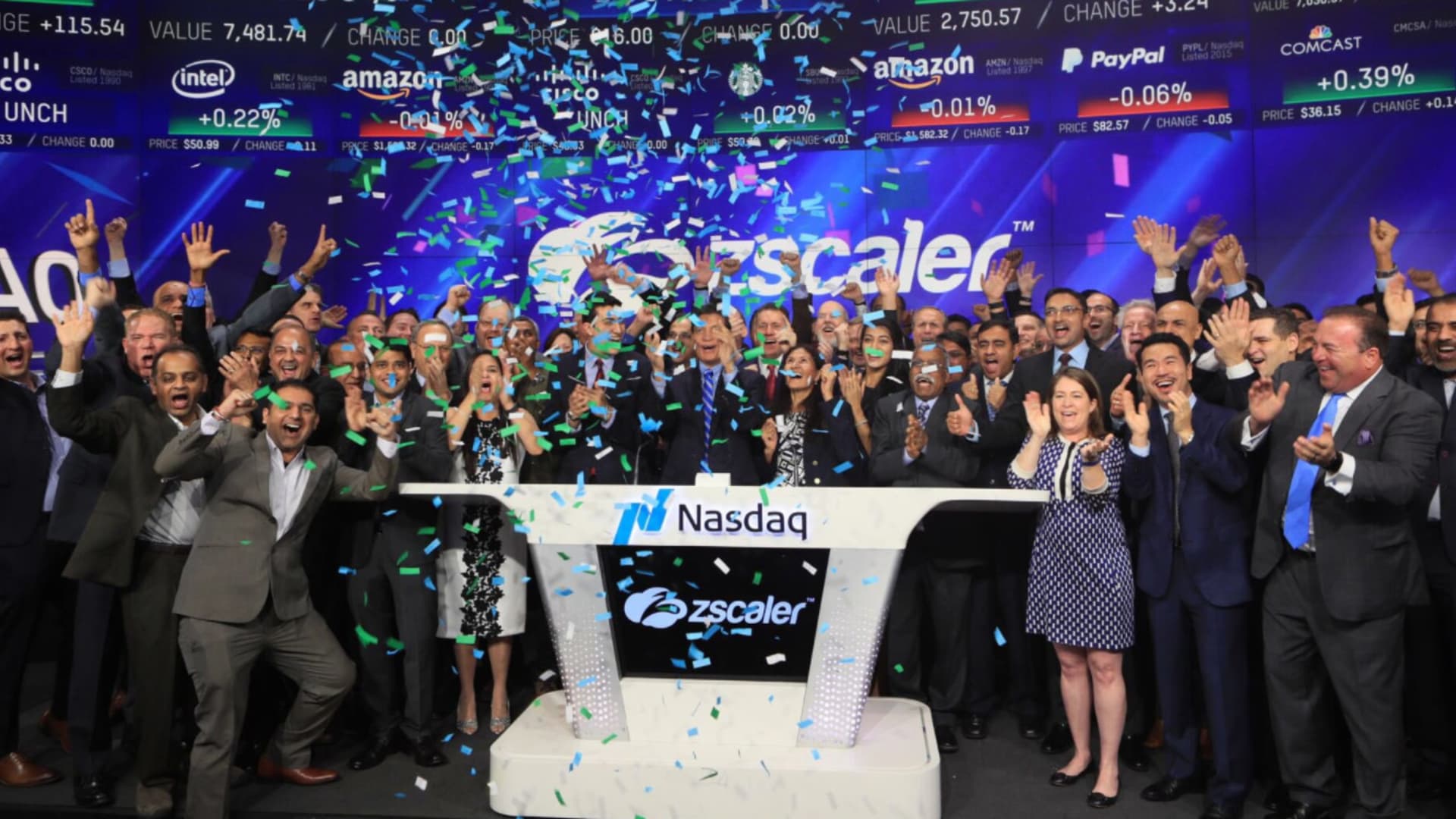
    Zscaler, the cloud security firm, exhibited a rise of 8% after their Q3 results beat analyst’s estimates, and Palantir Technologies advanced over 5% due to an expansion of ties with the government.

    In other news, Zscaler shares rose by 9% after reporting stronger-than-expected results in Q3, driven by artificial intelligence and adoption of its zero-trust security platform. Revenues of the cloud security software company grew 23% to $678 million, increasing from $553 million from the corresponding period last year, surpassing the LSEG estimate of $666 million.

    The stock market was also turbulent due to various factors including China breaching its preliminary trade deal with the U.S., causing the S&P 500 to waver despite strong weekly and monthly gains. This was further impacted by a federal appeals court ruling which allowed President Donald Trump to temporarily reinstate his “reciprocal” tariffs.

    Furthermore, despite a strong comeback month ending with gains in the S&P 500, Dow Jones Industrial Average, and the Nasdaq Composite, there are warnings of potential disappointments in U.S. growth owing to household and corporate spending plans. Alongside, there are ongoing concerns regarding the normalization across multiple sentiment indicators.


    Sources:

  • Stock Market Summary – May 29, 2025

    U.S. stocks were buoyant today with Dow Jones Industrial Average futures registering an upside of around 200 points, and S&P 500 and Nasdaq 100 futures rising approximately 1.1% and 1.6% respectively. This follows a federal trade court nullifying most of President Donald Trump’s “reciprocal tariffs”, which reversed abruptly shifting trade policies that rattled investors. Affected stocks rebounded, with Lululemon shares gaining 0.8% and Deckers Outdoor climbing roughly 2.6%.

    In corporate news, Nvidia shares jumped 3% after reporting fiscal first quarter adjusted earnings and revenue that exceeded Wall Street predictions, despite sales disruption due to U.S. semiconductor export restrictions on China. E.l.f. Beauty shares leapt 22% after releasing earnings and revenue that surpassed analyst estimates. The cosmetics firm also plans to acquire Rhode, Hailey Bieber’s beauty brand, in a deal potentially worth up to $1 billion.

    Several underperforming stocks were also noted. Shares of Salesforce, a customer relations management software maker, dipped 5% after RBC Capital Markets downgraded the stock amid potential acquisition risks. Additionally, electronics retailer Best Buy recorded a fall in its shares by over 9% due to missing quarterly revenue expectations and lower full-year sales and adjusted earnings per share projections due to tariffs. Finally, HP shares declined by 8% due to tariff-related disappointing third quarter guidance.

    Elsewhere, the Trump administration criticized trade-court judges after they rejected the view that the president could enact a global tariff regime. The court’s decision temporarily blocked all of Trump’s tariffs, giving the administration some respite while they prepare to fight the case. The government has appealed the judgment and is seeking a pause in enforcing the ruling during the appeal process.

    Meanwhile, Wells Fargo reported that the growing popularity of stablecoins among banks and payment companies could impact payments stocks as the administration rolls back on restrictive Biden-era crypto policies. They highlighted Mastercard and PayPal as two companies which have incorporated stablecoins into their strategy.

    Finally, Federal Reserve Chair, Jerome Powell met with President Trump at the White House after the latter pressured for lower interest rates. The meeting’s outcomes suggest monetary policy will be determined by incoming economic data and the outlook, rather than politically motivated decisions.

    Nvidia CEO Jensen Huang adopted a more somber tone during the recent earnings call, despite announcing strong earnings. Yet Nvidia shares were up about 4% and were about 8% short from its all time high.

    Starbucks shares, however, fell around 2% to roughly $84 per share following a downgrade by TD Cowen from buy to hold. Year to date, the stock is down 7%. Despite TD Cowen’s cautious outlook citing high labor costs and slowing North American sales, CNBC’s Jim Cramer remains optimistic about Starbucks’ turnaround potential under the leadership of CEO Brian Niccol.

    San Francisco-based health tech company Omada Health plans to go public with a market cap of up to $1.1 billion through an IPO, seeking to raise up to $158 million. Its shares are expected to be priced within a range of $18 to $20.

    Salesforce shares decreased about 6% despite positive Q1 results and a raise in the company’s full-year guidance, largely attributed to increased strength in artificial intelligence. The slight miss on current remaining performance obligation growth for Q2 and a slight operating margin miss contributed to the post-earnings downturn.

    Lastly, GE Vernova shares slumped by more than 3% following its downgrade to a hold from buy by Jefferies. Despite this, CNBC’s Jim Cramer views this as an investment opportunity for those seeking to establish an initial position in the stock.

    Note: Without the original articles, accurate numbers for Dow, S&P, and Nasdaq cannot be provided. Additionally, no specific ‘main gainers or losers’ were mentioned in the given articles.


    Sources:

  • Stock Market Summary – May 28, 2025

    Financial tech company, Palantir Technologies has partnered with Fannie Mae, a government-backed loan entity, to enhance mortgage fraud detection using AI technology. Palantir shares have increased by over 140% since the 2020 presidential election, signifying a potential trend towards the modernization of U.S federal institutions.

    Financial markets saw a slight decline as investors await upcoming earnings reports from Nvidia and Salesforce. In recent news, Boston Scientific is planned to withdraw from the global transcatheter aortic valve replacement (TAVR) market, a development expected to see benefit competitors such as Medtronic and Abbott Laboratories. Wells Fargo’s CEO, Charlie Scharf, expressed confidence that the $1.95 trillion asset cap imposed on the bank by the Federal Reserve in 2018 may soon be lifted.

    Federal Reserve officials conveyed concerns around the potential for tariffs to exacerbate inflation rates and the complexity this might introduce to interest rate policy. Despite these concerns, policymakers remained optimistic about economic growth, maintaining the benchmark federal funds rate between 4.25%-4.5%.

    President Donald Trump denied allegations that his fluctuating tariff threats were a strategic withdrawal in response to unfavorable market reactions. Trump asserted his approach was part of a negotiation tactic, intended to further U.S interest in trade discussions.

    In comparison to U.S stocks, international stocks have significantly outperformed, with the iShares MSCI All Country World Index Ex U.S. ETF (ACWX) increasing by over 14% in 2025, while the S & P 500 saw marginal growth. This trend signifies a potential shift in currency and equity markets, as capital continues to flow away from the dollar and U.S stocks.

    Nvidia, an AI chip giant, is set to report its fiscal first-quarter earnings after the bell. Wall Street is expecting an adjusted earnings per share of 93 cents and revenue of $43.31 billion for the quarter. However, investors are vigilant about the possible impact of the Trump administration’s export restrictions on Nvidia’s Handel H20 chips, which are directed towards the Chinese market, on Nvidia’s revenue. Meanwhile, the stock market is slightly down as it awaits major earnings reports from Nvidia and Salesforce.

    Nvidia’s CEO, Jensen Huang, has been pitching the company’s AI infrastructure to foreign countries, which might be discussed during the earnings call. Salesforce is expected to show some growth from its core business, but the delay in revenue from its newly launched platform, Agentforce, is creating apprehension among investors. Research firm Melius increased Broadcom’s price target from $198 to $283 based on the growth of its custom AI accelerator customer base.

    In financial advice, recent college graduates are encouraged to start saving for retirement immediately. Investing in a diversified long-term plan such as index funds, including exchange-traded funds, is recommended. A higher percentage of investment should be in equities for a long-term financial goal, while a smaller percentage can be invested in bond funds for diversification across the stock and fixed-income market.

    Meanwhile, John Laurinaitis, the co-defendant in a lawsuit accusing former WWE boss Vince McMahon of sexual abuse and sex trafficking, agreed to provide evidence to the accuser, Janel Grant. Laurinaitis also reached a confidential settlement with Grant, a development that may affect WWE’s stock in the coming sessions.


    Sources: